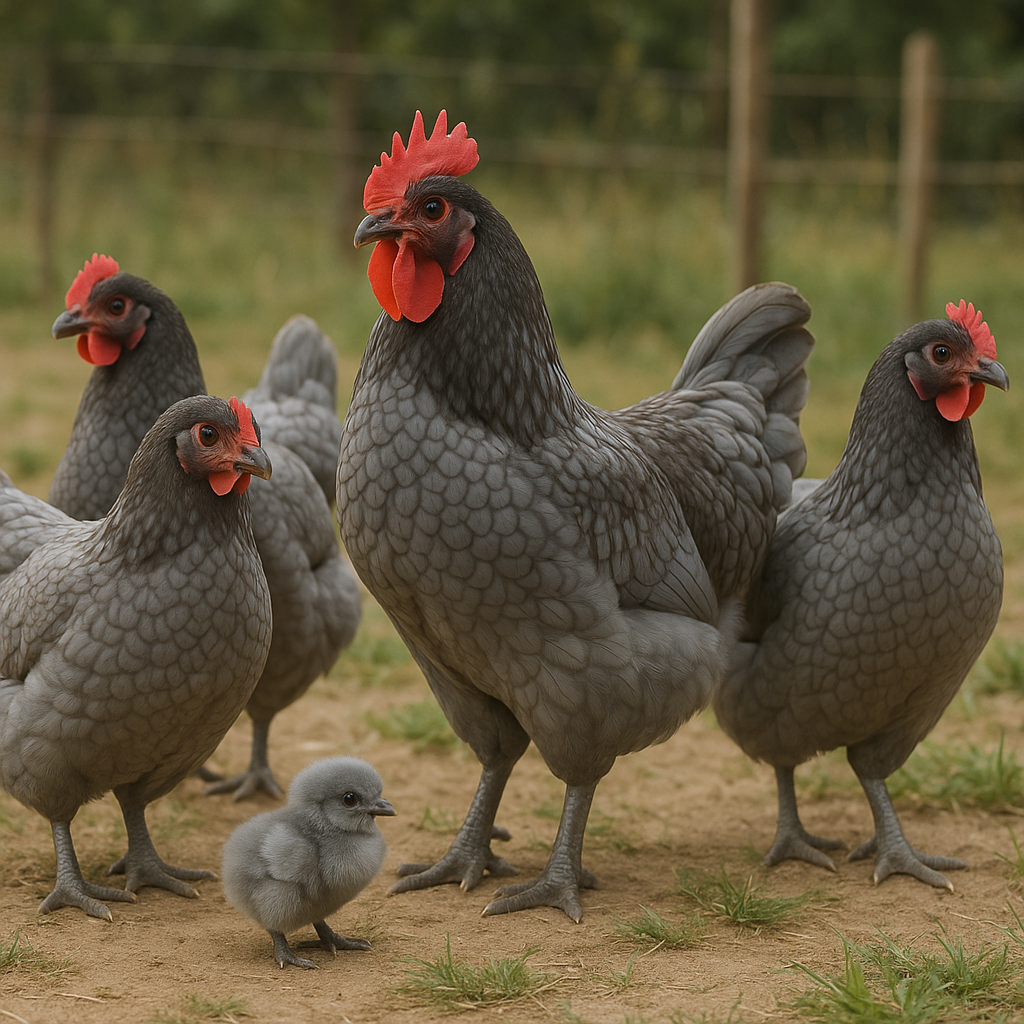
Blue Rock Female 2–3 Weeks
Blue Rock Female 2–3 Weeks
Vaccination History
Vaccination History
Couldn't load pickup availability
Blue-gray chickens with brown eggs and a calm disposition
Blue Rocks are blue-gray, Plymouth Rock-type chickens valued for brown eggs and a calm, approachable temperament. The name can refer to different hatchery lines or hybrids, so mature size, coloring, and laying performance vary.
Blue Rock is a hatchery name commonly used for blue-feathered, Plymouth Rock-type chickens, including hybrid lines. It does not identify one consistently standardized breed, so the source flock matters when comparing size, egg production, and other traits.
Hens lay brown eggs, usually large once laying is established. A reasonable reference range is 200–300 eggs per year, with first eggs around 18–24 weeks; diet, daylight, season, and individual development affect production.
These chickens are commonly described as calm and manageable, making them a practical option for beginners and family flocks. They can adapt to a roomy enclosed run and also enjoy foraging. In Central Florida, provide reliable shade, strong coop ventilation, fresh water, and dry shelter; their substantial body size makes heat management important.
Blue Rock Breed Facts
| Egg Color | Brown |
|---|---|
| Egg Size | Large |
| Approx. Eggs / Year | 200-300 |
| Approx. Age at First Lay | 18-24 weeks |
| Temperament | Calm, friendly |
| Mature Hen Weight | 5-7 lb |
| Mature Rooster Weight | 7-9 lb |
| Purpose | Dual-purpose; egg-focused lines |
| Broodiness | Low to moderate; line-dependent |
| Heat Tolerance | Moderate |
| Cold Tolerance | Good |
| Confinement Tolerance | Good with adequate space |
| Foraging / Free-Range Ability | Good |
| Appearance / Distinctive Characteristics | Blue-gray plumage, darker neck feathers, single comb, unfeathered legs; coloring varies by line. |
| Beginner Friendly | Yes |
| Family / Child Friendly | Yes; supervised handling |
| Flock Compatibility | Good with similarly calm chickens; introduce newcomers gradually. |
| Housing / Space Notes | Plan at least 4 sq ft per bird indoors and 10 sq ft in the run; more space, shade, and ventilation are preferable. |