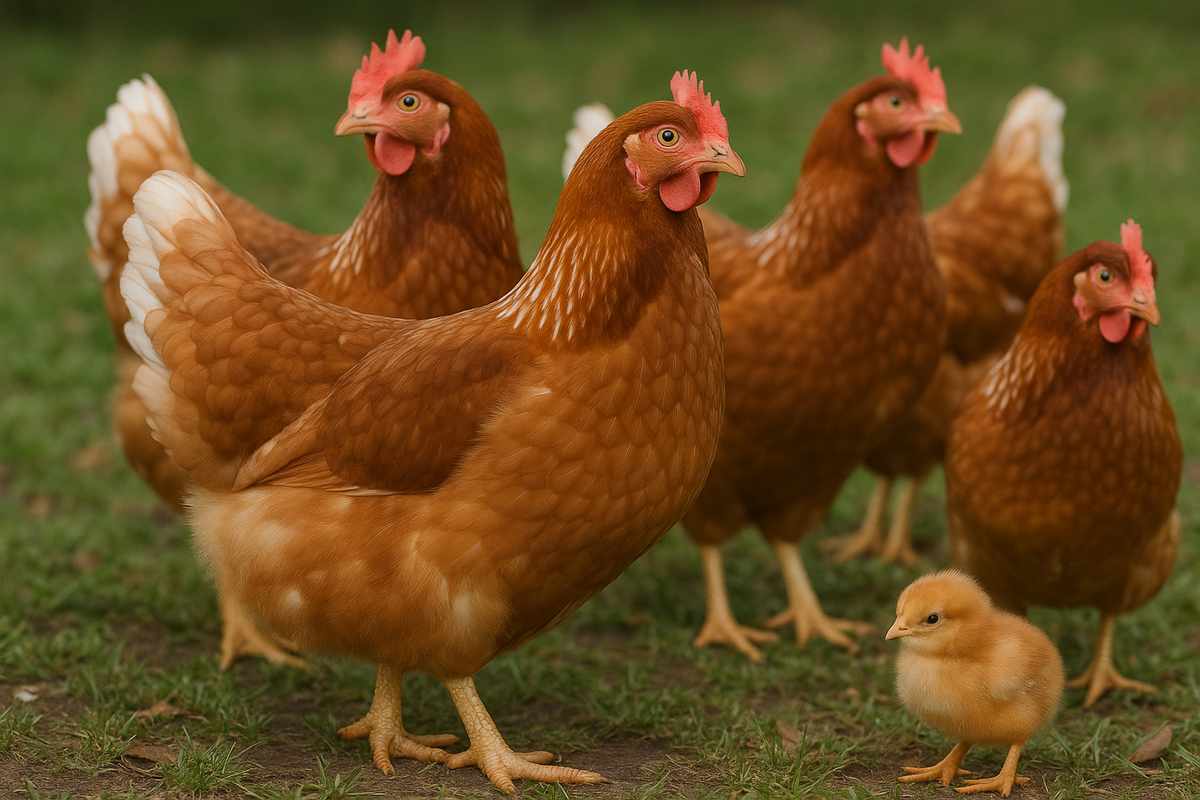
ISA Brown Female 3–5 Weeks
ISA Brown Female 3–5 Weeks
Vaccination History
Vaccination History
Couldn't load pickup availability
Friendly hybrid layers known for abundant brown eggs
ISA Browns are commercial hybrid chickens valued for strong brown-egg production and a calm, approachable temperament. Their manageable size and adaptability make them a practical choice for beginners and backyard egg flocks.
The ISA Brown is a commercial laying hybrid rather than a heritage breed. Hens have reddish-brown plumage with lighter feathers, while males are predominantly white. Breeding ISA Browns together does not reliably reproduce the same appearance or laying traits.
Hens commonly begin laying at 18-22 weeks and can produce roughly 280-330 eggs during their first full laying year under suitable conditions. Eggs are brown and usually large, with size increasing as hens mature. Production varies with nutrition, daylight, health and management, and declines with age.
ISA Browns are usually calm, friendly and comfortable in well-managed backyard housing. For Central Florida, provide generous shade, reliable fresh water and strong coop ventilation. Secure housing, dry bedding, a balanced layer ration once laying begins, and room to scratch and explore support good everyday care.
ISA Brown Breed Facts
| Egg Color | Brown |
|---|---|
| Egg Size | Large to extra-large |
| Approx. Eggs / Year | 280-330 in first full laying year |
| Approx. Age at First Lay | 18-22 weeks |
| Temperament | Calm, friendly, docile |
| Mature Hen Weight | 4.5-5.5 lb |
| Mature Rooster Weight | 6-7 lb |
| Purpose | Egg production |
| Broodiness | Low |
| Heat Tolerance | Good with shade and ventilation |
| Cold Tolerance | Good with dry, draft-protected housing |
| Confinement Tolerance | Good with adequate space and enrichment |
| Foraging / Free-Range Ability | Good |
| Appearance / Distinctive Characteristics | Hens: reddish-brown with lighter feathers; roosters: mostly white; single comb |
| Beginner Friendly | Yes |
| Family / Child Friendly | Yes; supervise children |
| Flock Compatibility | Good with calm flockmates; monitor introductions and bullying |
| Housing / Space Notes | Plan at least 4 sq ft per bird in the coop and 10 sq ft in the run; more space is preferable. Prioritize shade and airflow. |