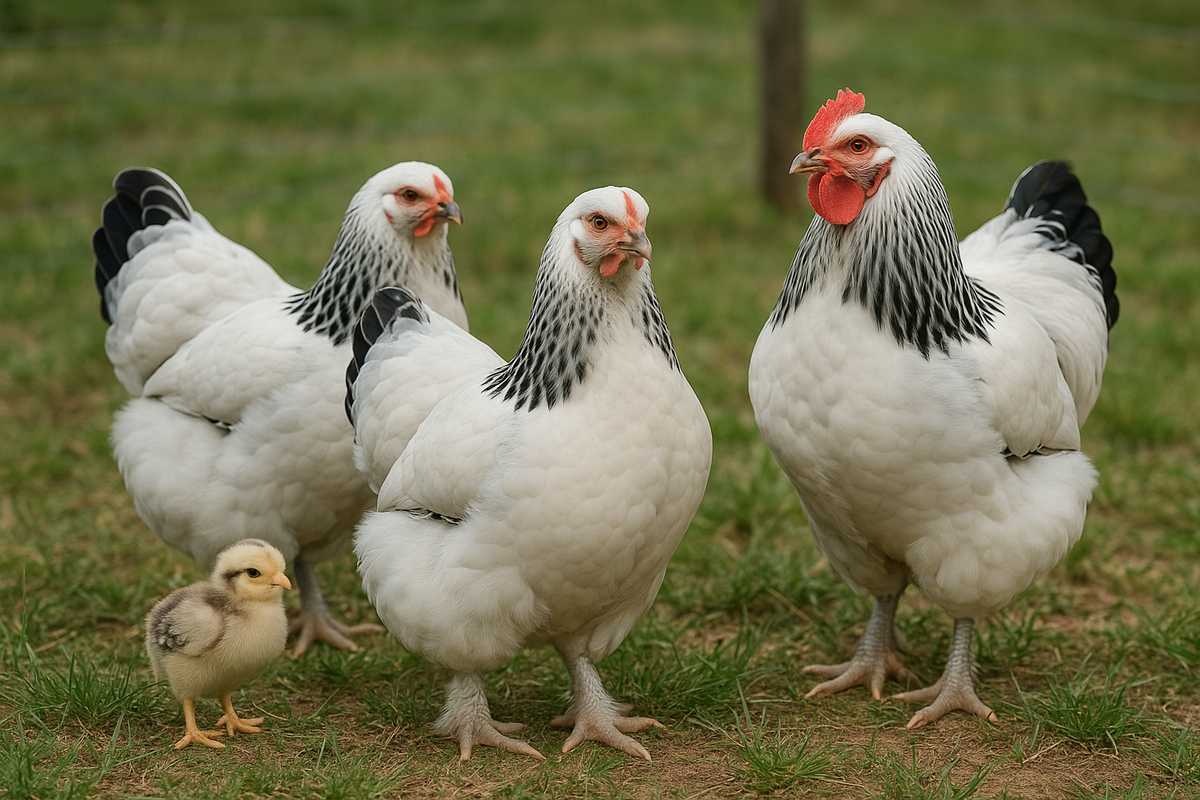
Light Brahma Female 5–9 Weeks
Light Brahma Female 5–9 Weeks
Vaccination History
Vaccination History
Coccidiosis — 09/02/2026
Marek’s — 09/02/2026
Gumboro (IBD) — 09/19/2026
Newcastle / Bronchitis — 09/19/2026
MG F-strain — 09/26/2026
Coryza #1 — 10/12/2026
Couldn't load pickup availability
Gentle giants with striking white-and-black plumage
Light Brahmas are large, feather-legged chickens known for their calm disposition and distinctive white-and-black plumage. These dual-purpose birds lay brown eggs and need thoughtful heat management in Central Florida.
The Light Brahma is a color variety of the Brahma breed, recognized for its substantial size, feathered legs and feet, and small pea comb. Its predominantly white plumage is accented by black markings in the neck and tail.
Hens produce large brown eggs at a moderate rate and mature more slowly than many laying breeds. Laying may begin around 24–36 weeks, with timing and annual production varying with season, nutrition, and individual birds. Hens can become broody and may make attentive mothers.
Brahmas are commonly calm and manageable, making them a good option for beginners and families prepared to accommodate their size. In Central Florida, prioritize shade, strong ventilation, plentiful fresh water, and room to spread out during hot weather. Dry bedding and well-drained runs help keep their feathered feet clean.
Light Brahma Breed Facts
| Egg Color | Brown |
|---|---|
| Egg Size | Large |
| Approx. Eggs / Year | 150-200 |
| Approx. Age at First Lay | 24-36 weeks |
| Temperament | Calm, gentle, docile |
| Mature Hen Weight | 9.5 lb |
| Mature Rooster Weight | 12 lb |
| Purpose | Dual-purpose |
| Broodiness | Moderate |
| Heat Tolerance | Limited; heat-sensitive |
| Cold Tolerance | Very good; dry shelter essential |
| Confinement Tolerance | Good with ample space |
| Foraging / Free-Range Ability | Good |
| Appearance / Distinctive Characteristics | Large, white body with black neck and tail markings; feathered legs and feet; pea comb |
| Beginner Friendly | Yes; size and heat considerations |
| Family / Child Friendly | Yes; supervised handling |
| Flock Compatibility | Good with calm breeds; monitor for bullying by more assertive birds |
| Housing / Space Notes | Roomy housing, generously sized nest boxes, low sturdy roosts, and a dry, shaded run |