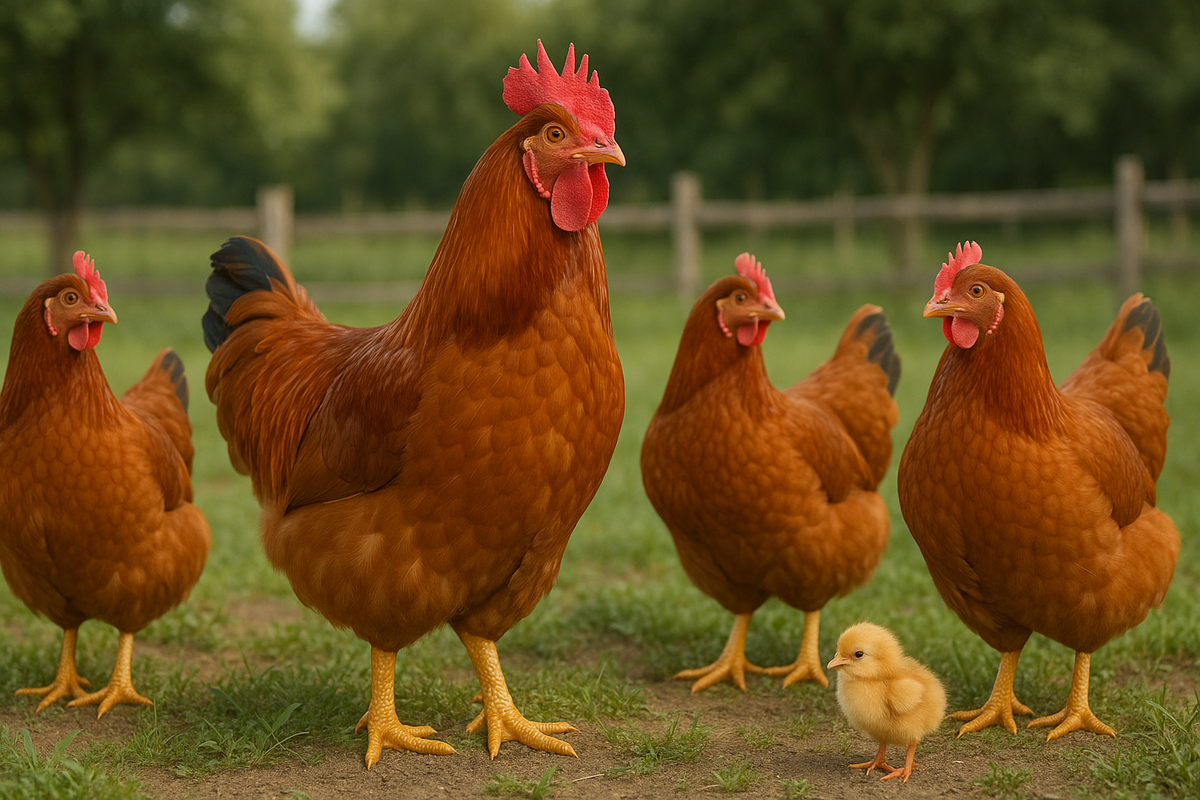
New Hampshire Red Female Laying Hen
New Hampshire Red Female Laying Hen
Vaccination History
Vaccination History
Couldn't load pickup availability
A sturdy dual-purpose chicken with chestnut-red plumage and brown eggs
New Hampshire Reds are dual-purpose chickens valued for brown eggs, sturdy growth, and active foraging. Hens are commonly calm and approachable, though some birds can be assertive within the flock.
Developed in New Hampshire from Rhode Island Red stock, the New Hampshire breed was selected for earlier maturity, rapid growth, and meat qualities. Its rich chestnut-red feathers, black tail accents, yellow legs, and single comb give it a classic farmyard appearance.
Hens produce large brown eggs, with a common annual range of 200-250 under suitable care. Laying onset and production vary with genetics, nutrition, season, and management. Some hens become broody, but broodiness is not consistent across all lines.
New Hampshires adapt to a secure coop and run and also enjoy opportunities to forage. For Central Florida conditions, provide reliable shade, abundant fresh water, and strong ventilation, especially during hot, humid weather. Their confident temperament can suit mixed flocks, but introductions should be supervised; individual personalities, particularly among roosters, vary.
New Hampshire Red Breed Facts
| Egg Color | Brown |
|---|---|
| Egg Size | Large |
| Approx. Eggs / Year | 200-250 |
| Approx. Age at First Lay | 18-24 weeks |
| Temperament | Calm, confident, sometimes assertive |
| Mature Hen Weight | 6.5 lb |
| Mature Rooster Weight | 8.5 lb |
| Purpose | Dual-purpose |
| Broodiness | Moderate; varies by line |
| Heat Tolerance | Good with shade and ventilation |
| Cold Tolerance | Good; comb vulnerable to frostbite |
| Confinement Tolerance | Good with adequate space |
| Foraging / Free-Range Ability | Good |
| Appearance / Distinctive Characteristics | Chestnut-red plumage, black tail accents, yellow legs, single comb |
| Beginner Friendly | Yes |
| Family / Child Friendly | Yes; supervise children around roosters |
| Flock Compatibility | Good with similar-sized breeds; some birds may dominate timid flockmates. |
| Housing / Space Notes | Start with 4 sq ft per bird in the coop and 10 sq ft in the run; more space is preferable. Provide shade and ventilation. |