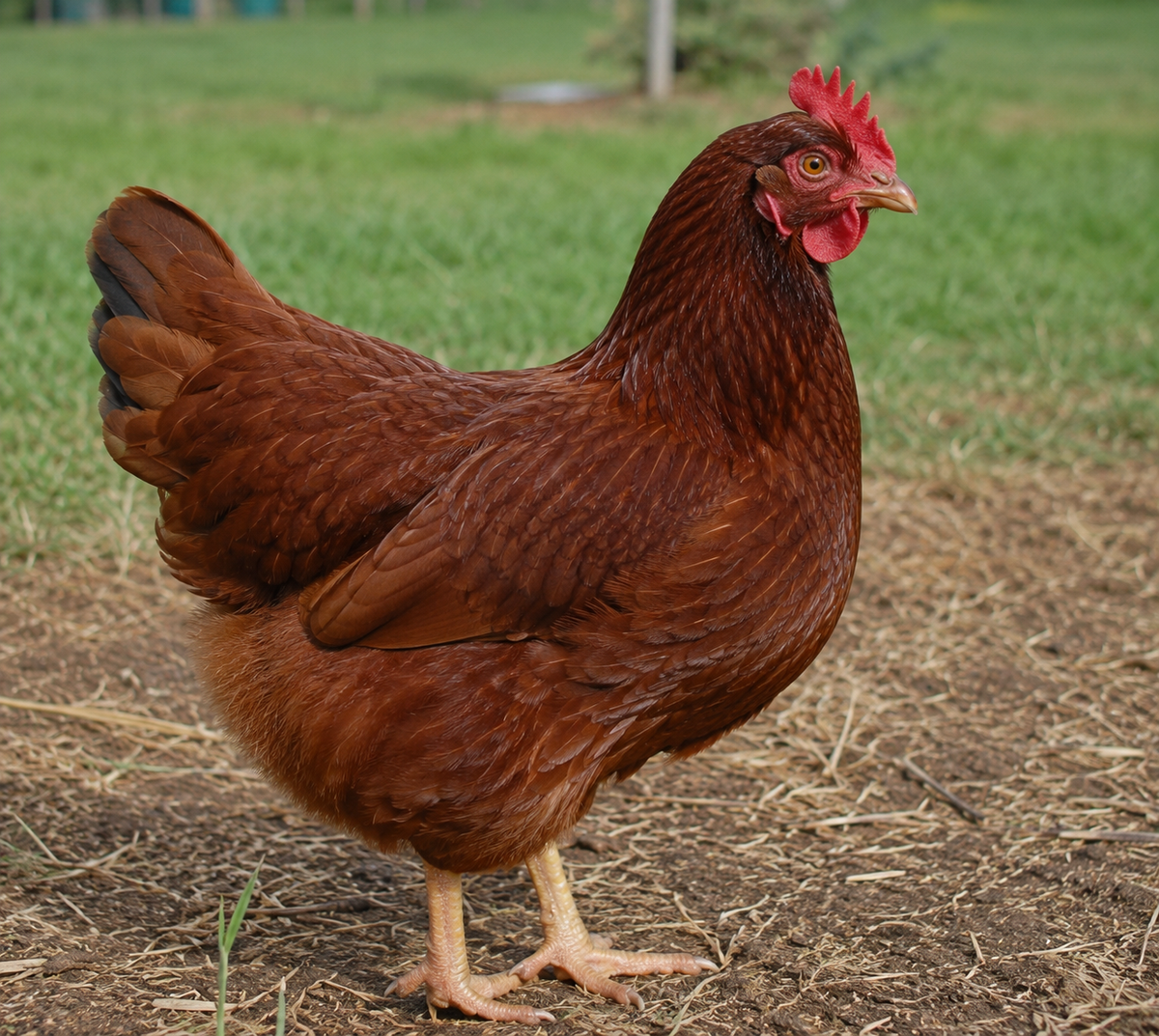
Rhode Island Red Female
0–2 Weeks
Rhode Island Red Female 0–2 Weeks
Vaccination History
Vaccination History
Coccidiosis — 10/28/2026
Marek’s — 10/28/2026
Couldn't load pickup availability
Rhode Island Red Chickens
Rhode Island Reds are hardy, dual-purpose chickens known for dependable brown-egg production and rich reddish-brown plumage. These active, confident birds suit many backyard flocks, though they can be assertive with gentler breeds.
Developed in the northeastern United States, the Rhode Island Red is a well-established dual-purpose breed valued for eggs and meat. Hens typically produce approximately 200–300 brown eggs per year, with output varying by strain, age, nutrition, daylight, and management. Production-focused strains generally lay more than heritage strains.
Rhode Island Reds are alert, curious, and enthusiastic foragers. Many become comfortable around people with calm handling, but they are not consistently cuddly birds. Hens may rank high in the flock's pecking order, and roosters can be protective or aggressive.
For Central Florida flocks, provide generous shade, excellent ventilation, and constant access to fresh water. Rhode Island Reds can adapt to a secure coop and run, but they benefit from room to explore, scratch, and dust-bathe. Their reputation for hardiness does not eliminate the need for careful hot-weather management.
Rhode Island Red Breed Facts
| Egg Color | Brown, typically ranging from light to medium brown. |
|---|---|
| Egg Size | Typically large once hens mature; early eggs are often smaller. |
| Approx. Eggs / Year | Approximately 200–300 eggs per hen under good management, with production strains generally outperforming heritage strains. Laying declines with age and may pause during molt. |
| Approx. Age at First Lay | Typically around 18–24 weeks; heritage strains and birds maturing during shorter days may start later. |
| Temperament | Active, alert, confident, and often people-tolerant with regular gentle handling. Hens can be assertive, and rooster temperament varies considerably. |
| Mature Hen Weight | Approximately 6–6.5 lb for mature standard-bred hens; some production strains are lighter. |
| Mature Rooster Weight | Approximately 8–8.5 lb for mature standard-bred roosters; some production strains are lighter. |
| Purpose | Dual-purpose: brown eggs and meat, with many modern strains selected primarily for egg production. |
| Broodiness | Generally low, especially in production strains. Heritage hens may occasionally go broody, but the breed is not a dependable choice for natural incubation. |
| Heat Tolerance | Generally adaptable to warm climates, but sustained Central Florida heat and humidity require shade, strong airflow, ample drinking water, and avoidance of crowding. |
| Cold Tolerance | Good overall cold hardiness with dry, well-ventilated shelter. Large single combs and wattles, particularly on roosters, remain vulnerable to frostbite. |
| Confinement Tolerance | Usually tolerates a spacious coop and run well when provided with enrichment; cramped or barren housing can contribute to pecking and bullying. |
| Foraging / Free-Range Ability | Very good; active birds that enjoy searching for insects, seeds, and greens. Foraging supplements rather than replaces a balanced poultry ration. |
| Appearance / Distinctive Characteristics | Standard birds have a sturdy, rectangular body, rich reddish-brown to deep mahogany plumage, black in the tail, yellow legs, and red combs, wattles, and earlobes. Single combs are most common, though rose-combed birds also exist; production strains may be lighter in color and build. |
| Beginner Friendly | Generally a good beginner choice because of their adaptability and egg production, provided owners manage flock dynamics and routine housing needs. |
| Family / Child Friendly | Hens can suit family flocks when calmly handled, but individual personalities vary. Supervise children around all chickens, and use particular caution with roosters. |
| Flock Compatibility | Often works well with other active, similarly sized chickens. Monitor introductions and watch for bullying of timid birds, bantams, or newcomers; provide multiple feeding and watering points. |
| Housing / Space Notes | As a starting guideline, allow at least approximately 4 sq ft of usable indoor coop space and 10 sq ft of outdoor run space per standard-sized bird, with more room preferred for continuous confinement. In Central Florida, prioritize shaded run areas, excellent coop ventilation, dry footing, predator protection, and space for dust bathing. |